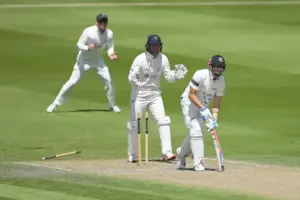
Standing still is the quickest way to lose a Test match, and on day two at Lord’s, England stood still while India sprinted.
On Saturday, the second day of the first women’s Test ever staged at the home of cricket, India bowled England out for 170 and then eased to 154 for 1 by stumps, an overall lead of 269, as reported by Sky Sports and IANS. For the home supporters who queued to witness history — a women’s Test at Lord’s at last, 142 years after the ground staged its first Test in 1884, as ESPNcricinfo noted — the day drifted steadily from celebration towards damage control.
Yet, looking deeply at how the day unfolded, this was less an England collapse than an Indian statement.
Kranti Gaud Announces Herself At The Home Of Cricket
The morning belonged to Kranti Gaud. The seamer ripped through England’s middle and lower order to finish with 5 for 37, a maiden Test five-wicket haul that, according to IANS, made her the youngest Indian woman fast bowler to take a five-for in Test cricket, surpassing the great Jhulan Goswami.
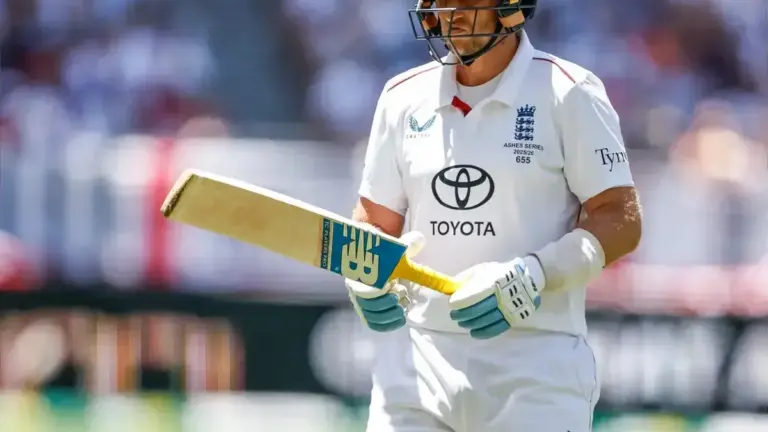
England, who had resumed the day 264 behind, found resistance only in patches. Amy Jones made a fighting 52 and Nat Sciver-Brunt 44, but with Sneh Rana claiming 2 for 41 and Deepti Sharma chipping in, the innings folded for 170 — a first-innings deficit of 115 against India’s 285.
That 285 already looked a strong total on this surface. By the time Gaud had finished her work, it looked a match-defining one.
Smriti Mandhana’s Match Of Milestones
If Gaud owned the morning, Smriti Mandhana owned the evening. Having top-scored with 83 on day one, she closed day two unbeaten on 69, and IANS reports she is only the fourth Indian woman to record two fifty-plus scores in the same Test.
After Shafali Verma had given the second innings early momentum, Mandhana and Yastika Bhatia, unbeaten on 39, batted through to stumps without further loss. The numbers at the close tell a stark story: India lead by 269 with nine second-innings wickets in hand and two full days remaining.
Every hour India bat on Sunday morning stretches England’s task towards the impossible. A target beyond 350, against Gaud’s pace and the spin of Rana and Sharma on a wearing pitch, would ask England to produce something entirely out of keeping with their batting across the first two days.
Can England Save The First Women’s Test At Lord’s?
The hosts are not without hope. Jones showed the pitch still rewards positive intent, Sophie Ecclestone has already made history with the ball in this match, and a fourth-innings chase at least removes the scoreboard ambiguity: England will know exactly what is required.
But hope needs partners. England’s batting has already buckled once against Gaud and the new ball in this game, and Mandhana’s serene second innings suggested the surface holds few demons for batters willing to trust their defence. England’s realistic route back is early wickets in the first hour on Sunday — anything less and the equation becomes about survival, not victory.
The evidence of two days points one way in this long-awaited Lord’s Test. India did not come to make up the numbers at history’s party — they came to headline it, and as of Saturday night they are doing exactly that.