The 2026 ICC Women’s T20 World Cup has already won the argument for scale. The harder question, now that the semi-final field is set, is whether cricket’s governing class is prepared to fund the game that those crowds have proved exists.
The ICC confirmed last week that the tournament had moved beyond 125,000 spectators across its first 17 matchdays, with tournament director Beth Barrett-Wild framing that figure as proof that women’s cricket had been pushed firmly into the mainstream. By Monday morning, that commercial story had sharpened again: The Guardian reported that overall attendance had climbed beyond 160,000, with Sunday’s Lord’s double-header drawing more than 27,000.
That is no longer a soft-growth story. It is a market signal.
Attendance Has Outrun The Old Assumptions
The knockout schedule gives the ICC exactly the visual it wanted when the event was expanded to 12 teams: Australia against West Indies, then England against South Africa, with the final still to come at Lord’s. The official ICC fixture list now places two high-value semi-finals in London, and the competition has carried enough volatility to avoid feeling like a procession.
Australia’s record chase against India, England’s unbeaten group-stage push and South Africa’s late route into the last four have all helped sell a tournament with genuine jeopardy. ReadCricket’s own coverage of Sophia Dunkley’s England selection call underlined how even the hosts’ strongest XI is still being argued over rather than simply rubber-stamped.
That matters. Women’s cricket has often been marketed as a cause before being treated as a product. This World Cup has flipped that framing. Supporters are not merely endorsing the idea of growth; they are buying tickets, filling broadcast windows and creating a semi-final week with obvious commercial pull.
The Funding Gap Is Now More Exposed
The uncomfortable part for the ICC is that popularity makes the structural gaps harder to excuse. If a tournament can draw six-figure crowds in England and Wales, while associate and emerging nations still operate with fragile sponsorship bases, uneven domestic contracts and limited full-time support, the problem is no longer audience demand. It is distribution.
That is the pressure point behind the attendance headlines. Scotland and the Netherlands have had the value of exposure, but exposure alone does not pay retainers, medical staff, analysts, travel programmes or year-round fixtures. The expanded field is only meaningful if the teams invited into it can build towards the next cycle rather than treat qualification as a brief interruption to underfunding.
For the strongest boards, the current model still works. England can absorb Nat Sciver-Brunt’s injury absence and continue to win. Australia can test combinations and remain ruthless. India can leave the tournament disappointed and still return to one of the deepest domestic systems in the sport. Smaller boards do not have that cushion.
What The ICC Has To Prove Next
The post-tournament review cannot stop at attendance, broadcast reach and social engagement. Those metrics will be impressive, but they are only the top layer. The real legacy test is whether this World Cup changes the funding formula beneath the elite tier.
Three areas should be non-negotiable:
- Ring-fenced development money for teams outside the established top eight.
- Minimum professional standards around support staff, preparation blocks and player welfare.
- More bilateral certainty so emerging teams are not visible only when global events come around.
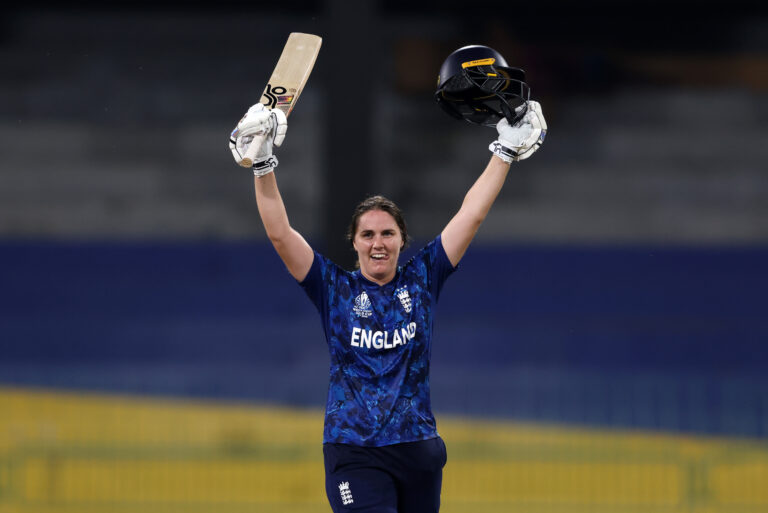
England’s semi-final week may deliver the tournament’s most marketable images. The fuller test is whether Beth Barrett-Wild’s mainstream breakthrough becomes a funding reset rather than a month of useful optics. Crowds have answered their part of the argument. The ICC now has to answer the harder one.