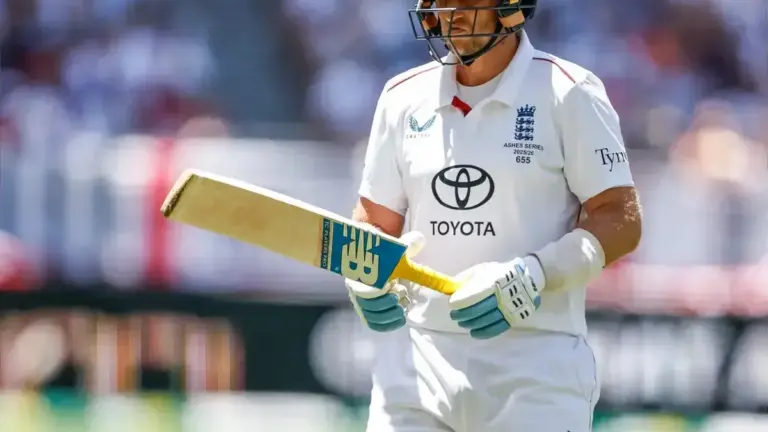
Stephen Fleming faced the media for the first time since taking charge of England’s Test side in July 2026, and he did not shy away from the questions supporters most wanted answered. The former New Zealand captain succeeded Brendon McCullum, who shifted his focus to the white-ball side over the summer while staying part of the wider England set-up. Fleming’s tone throughout was calm but direct, especially once the conversation turned to the Ashes.
Asked whether English cricket carries too much weight around beating Australia, he rejected the idea outright. He made clear the obsession is shared, not one-sided, and that he intends to bring his own hunger for the contest into the role. He also confirmed he will respect Ben Stokes’ decision to retire from international cricket rather than try to change his mind, and he set out early standards for conduct he expects from his squad.
The session, covered in Fleming’s BBC Sport media appearance, gave the clearest signal yet of how he intends to shape England’s Test team, from his tactical instincts to his views on discipline. It landed at a moment when red-ball cricket is drawing attention across the world, whether that is Babar Azam’s red-ball cricket returns in domestic cricket or South Australia’s Sheffield Shield domestic preparation for their own campaign.
Press Conference Summary & Headline Reaction
The headline from Fleming’s first appearance was unmistakable. He wants England to be judged on results against Australia, and he made no attempt to play down that ambition. There was little of the caution some expected from a coach only weeks into the job. Instead, Fleming spoke with the certainty of someone who has thought carefully about what he wants his England side to look like.
He was equally clear on the Stokes situation, closing the door on any suggestion that England’s talisman might be persuaded to reconsider his retirement. That combination, ambition on the field and respect for a player’s personal decision off it, set the tone for everything that followed.
Manager Transcript & Dissection (Stephen Fleming)
Fleming was asked directly whether English cricket is too fixated on beating Australia. His answer left no doubt about where he stands.
“No, because I have an obsession with it as well. New Zealand has an obsession with it, we love it.”
He expanded on that point, framing New Zealand’s relationship with the Ashes rivalry as something that fuels his own motivation in the England job.
“We want to beat the Aussies. We’re heavily linked to England performances. We have a deep desire to beat Australia in everything, as the little cousin. We are linked, and I’m incredibly excited about being part of it.”
Fleming played 14 Test matches against Australia during his career with New Zealand and did not win any of them. That history appears to sharpen rather than dull his appetite for the challenge now in front of him.
“You don’t think you’re ever going to get that opportunity. To have that opportunity and be part of it, I can’t wait.”
On the identity he wants England to build, Fleming spoke in broad terms rather than committing to specific selections or tactics, staying true to the vision-setting tone of an opening press conference.
“I want to be my best self and have a team that represents itself in the best possible way. I’ve got a vision of that and it’s aspirational. It will be brilliant.”
None of this amounts to a tactical blueprint yet, and Fleming offered no hints about personnel. What comes through instead is a coach who sees the Ashes as personal unfinished business, shaped by a playing career in which the urn always stayed out of reach. Supporters should read his answers as a statement of intent rather than a promise of results, but the sincerity behind them was hard to miss.
Manager Transcript & Reaction (Brendon McCullum)
Fleming was also asked to compare his approach with that of Brendon McCullum, his former New Zealand team-mate, business partner and predecessor in the Test role. McCullum was replaced as England’s Test coach earlier in the summer but remains in charge of the white-ball side, meaning the pair will continue to work within the same England set-up.
Fleming did not pretend the two men share an identical outlook, offering a memorable comparison when asked about risk-taking.
“I’ll bet on the favourite and he’ll bet on the longest odds possible.”
That contrast speaks to McCullum’s reputation for bold, attacking declarations and aggressive field settings, built during his own spell in charge of the Test side. Fleming was then asked whether a team needs a defined brand or style to succeed in the format, and his answer suggested a more adaptable approach than McCullum’s front-foot philosophy.
“I don’t think so. The greatest thing for a team to do is to be able to play conditions and situations.”
He went further when asked how he wants England’s cricket to be perceived under his management, balancing structure with a degree of the flair supporters associate with the current group.
“I’d love people to say we are well-planned, there’s a discipline and a really strong basic structure to what we’re doing, but there’s also a bit of flair.”
Read together, Fleming’s comments suggest evolution rather than a wholesale break from what McCullum built. He appears intent on keeping the team’s competitive edge while adding a more calculated layer of decision-making, particularly around match situations where conditions dictate the smarter route.
Incident & Rulebook Context
Fleming’s first press conference also touched on off-field standards, a subject with clear relevance given the ongoing situation involving pace bowler Brydon Carse. Derbyshire Police have closed their investigation into Carse with no action taken, though he continues to face a separate inquiry from the Cricket Regulator. That distinction matters. The police process is over, but the regulatory scrutiny has not concluded, and Fleming’s remarks on conduct arrived against that backdrop.
Asked about the standards he expects from his players, Fleming was unequivocal about the responsibility that comes with representing England.
“You need to behave in accordance with your position. We’re in a very privileged position, and it’s understanding that privilege and what goes along with it. It can’t be convenient. You can’t be when it suits you to do the right things, then when you don’t want it to suit you, not.”
He returned to the theme when asked how such standards are maintained day to day, framing consistency as the foundation of any successful dressing room.
“You’ve got to live it every day. If we can create something when you want to live it every day and better, then that’s really powerful.”
Fleming was not drawn on the specifics of the Carse case, and nothing in his remarks suggested he was addressing it directly. The Cricket Regulator’s inquiry remains separate from the police matter and is ongoing, and any outcome will sit with that body rather than with the coaching staff.
The final subject raised was Ben Stokes, whose retirement from international cricket in July 2026 removed England’s most influential figure of the past decade. Fleming revealed he had met Stokes recently and found him settled with his decision.
“He was in a great space, really happy, enjoying his time with Durham,”
He was explicit that he has no intention of trying to change that outcome, describing the depth of thought that goes into a decision of that magnitude.
“He’s got a good winter planned with the family and is very much at peace with his decision. When a player makes that decision to retire, I respect that decision 100%.”
“To try to turn that around and question that is wrong. I know how much goes into that type of decision, and I respect that.”
Taken together, Fleming’s first public remarks as England Test coach set out a coach who is competitive about the Ashes, deliberate about standards, and respectful of the choices his players make about their own careers. There was no attempt to sketch selection plans or make promises about results. Instead, supporters got a clear sense of the principles that will guide the team as the Fleming era begins in earnest.