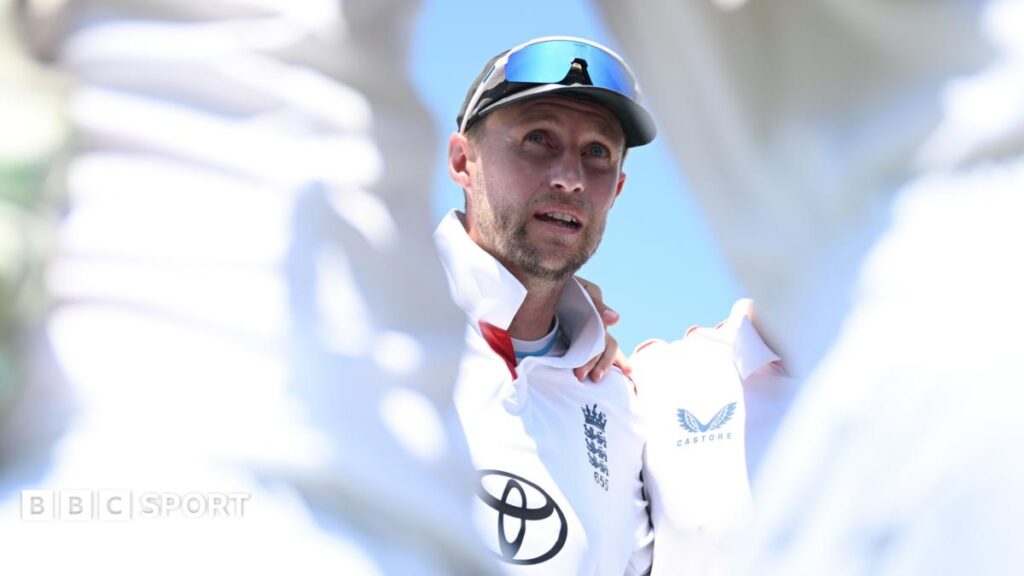

When Joe Root leads England out at Headingley on Wednesday, he will do it in his own city, nine years on from the afternoon at Lord’s when he marked his first Test as captain with 190 against South Africa. The decade in between took him past 14,000 Test runs, out of the captaincy once, and through the loudest era English cricket has known. At 35, he has the job back — and this time the noise has gone with it.
Root’s second tenure begins with Ben Stokes retired from international cricket, Brendon McCullum removed from the Test side but retained as white-ball head coach, and Marcus Trescothick in interim charge of the dressing room while Stephen Fleming is reported as the incoming permanent appointment. England sit mid-table in a World Test Championship cycle Australia lead. The three Tests against Pakistan, beginning on 19 August, are the first real evidence of what this side looks like without Bazball behind it.
Joe Root’s England captaincy record cuts both ways
Wednesday will be Root’s 66th Test as England captain, a national record, though still a long way short of the 109 matches Graeme Smith led South Africa. He has won more Tests in charge than any Englishman — a function of longevity as much as dominance. BBC Sport’s Marc Higginson notes that Root’s wins and losses as captain are level, leaving him sixth on win percentage among England captains with more than 30 Tests, behind Mike Brearley, Stokes, Michael Vaughan, Peter May and Andrew Strauss.
The tail of that first spell is what dragged the numbers down: one win in his last 17 Tests as captain. Against the two sides that define an England era, the picture is starker still. Root won 29% of his Tests against Australia and India, tenth on that list, behind Stokes (35%), Sir Alastair Cook (38%) and Brearley, whose 57% remains the benchmark. The counter-argument is equally available: across his first 47 Tests in charge, Root’s record was better than Stokes’s.
The side he inherits at Headingley
It is a batting order in transition. Jacob Bethell’s knee injury has opened up No. 3, and Jordan Cox has been told he will bat there for at least the first two Tests — an unfamiliar slot for a player who made his Test debut at No. 7. Ollie Pope and Dan Lawrence were recalled for the series, and Harry Brook, England’s white-ball captain, comes in as Test vice-captain rather than heir apparent in waiting.
Pakistan arrive with their own uncertainty. Babar Azam remains a doubt for the first Test, with the tourists expected to leave the call until match day. It is not the glamour fixture of the summer, which is rather the point: Root’s reign will be judged on whether England start converting winnable series into World Test Championship points.
A quieter kind of leadership
The early signals are cultural rather than tactical. Sky Sports reported that Root has scrapped the squad’s curfew, a decision Nasser Hussain publicly backed ahead of the series — a small thing that says plenty about a captain who trusts senior players to manage themselves. In the Guardian, Mark Ramprakash argued that while the process of appointing Root and Fleming had been a mess, the pairing could prove a good blend: a captain of enormous technical clarity alongside a coach with nothing left to prove.
England have spent four years being told that Test cricket needed rescuing by entertainment. Root’s job is subtler and harder — keeping what worked, discarding what did not, and doing it while still batting as the best England player of his generation. Headingley on Wednesday will settle none of it. But for the first time since 2022, England walk out led by a man whose default setting is to accumulate rather than to declare, and the three weeks that follow will tell us whether that is a correction or a retreat.
More from ReadCricket: Joe Root’s move to take over the England Test captaincy, Jordan Cox’s No. 3 call and the Babar Azam fitness doubt.

Comments.
Loading comments…