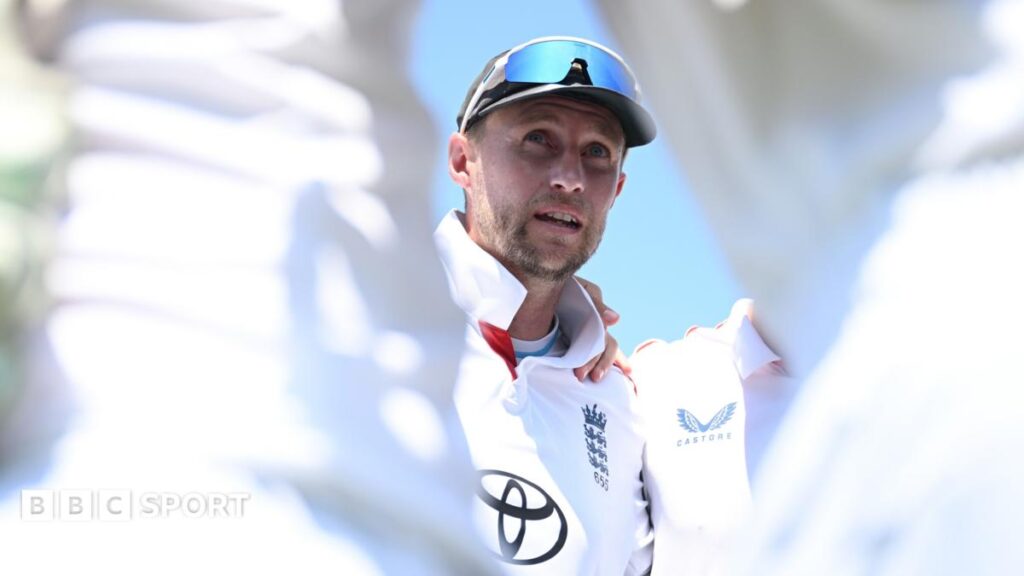

The newest Joe Root record began with an email from Lichfield. Charles Dennett watched Root and Jordan Cox put on 150 together at Headingley last week and was struck by the sort of thought that keeps cricket supporters up at night: surely nobody in Test history has shared a decent stand with more different team-mates than the England captain. He sent the question to BBC Sport, whose new Ask CricViz feature handed it to the analysts. On Tuesday morning the answer came back, and he had it exactly right.
Root has now made 50-plus partnerships with 45 different batting partners in Test cricket — the joint-most of all time, level with Shivnarine Chanderpaul of West Indies. It is not a statistic anybody will read out at Lord’s on Thursday, and it will never sit alongside the run tallies and the hundreds in the record books. But of all the numbers attached to Root’s career, it may be the one that best explains why England keep coming back to him.
The Joe Root record that measures endurance
Forty-five partners is really a measure of two things at once: how long Root has been in the side, and how much churn has gone on around him. Chanderpaul, his only equal, batted through West Indies’ bleakest decades, outlasting selectors, captains and entire generations of top order. Root has done something similar in a happier setting, batting on while England reordered the line-up in front of and behind him, season after season.
The stand that prompted the question was a case in point. Cox, who reached his maiden Test half-century in the same innings, had been batting at No 3 for a matter of days. Root, at the other end, was compiling a 66 that equalled a Sachin Tendulkar mark before falling short of the century the occasion seemed to be teeing up. CricViz notes that its figures take in the recent Australia v Bangladesh Test at Mackay but not the Sri Lanka v India match still under way in Colombo.
Josh Tongue and the hat-trick that will not come
The same batch of answers contained a gentler cruelty. Graham, of Hastings, wanted to know why Josh Tongue’s two wickets in two balls against Pakistan had not become three. CricViz found 1,355 occasions in its ball-by-ball database on which a bowler has taken wickets with consecutive deliveries; only 43 of them, 3.2%, went on to become hat-tricks. There have been 49 hat-tricks in Test history, 43 of which the analysts can track delivery by delivery.
Tongue has now had two in two on four separate occasions and has nothing to show for any of them: twice in the first Test at Headingley, once at the Melbourne Cricket Ground during the Ashes in December 2025 and once against India, also at Headingley, in June 2025. He is in distinguished company. Mitchell Starc has arrived at the same moment 17 times in Tests without once completing the set.
What the numbers carry into Lord’s
England reconvene on Thursday 1–0 up after an innings-and-103-run win in Leeds, and both statistics travel south with them. Root’s partner list is a live document rather than a closed one: every new cap handed out, every reshuffle forced by injury or absence, offers another name to add to it, and a second Test that asks harder questions than the first may yet supply one. Tongue, meanwhile, carries on bowling the sort of spells that make hat-tricks statistically likely and stubbornly refuse to deliver one.
Dennett’s instinct was the right one. The records that get engraved tend to be the ones about volume: runs, wickets, hundreds. The ones that actually describe a career are odder and quieter than that — 45 team-mates good enough, for one afternoon at least, to stay out there with Joe Root, and a fast bowler who has stood at the top of his mark four times knowing precisely what the next ball meant, and is still waiting for his reward.



Comments.
Loading comments…