India Edge Japan in Five-Over Tokyo Thriller
India beat Japan by two runs in a rain-shortened five-over T20 international on Tuesday, needing every one of those runs at Sano International Cricket Ground outside Tokyo. Shreyas Iyer’s side looked to have the game covered early on, only for Japan to push the contest all the way to the final ball.
The fixture marked 75 years of diplomatic relations between India and Japan, and it carried real historical weight beyond the scoreline. It was Japan’s first T20 international against a full-member nation, a landmark occasion for a board still building its senior men’s programme.
Rain reduced the match to five overs a side before a ball was bowled, a format that leaves almost no room to recover from an early setback. That compression shaped everything that followed, turning a routine fixture into a contest decided by a handful of deliveries at either end.
India’s 32-4 always looked a modest total to defend in such a short game. Japan reached 30-3 in reply, and the margin barely tells the story of a finish that ended in protest and a reversed umpiring call in the last over.
Hara-Hinze Strikes Early as India Post 32-4
India won the toss and batted first, but the innings never settled into any rhythm across the five overs. Iyer, recently appointed white-ball captain, watched his side stumble to 32-4, a total that would have looked light against most sides on a good day.
The damage began immediately. Japan spinner Charlie Hara-Hinze removed opener Abhishek Sharma without scoring, a golden duck that set the tone for a jittery India innings. Hara-Hinze finished with figures of 2-17 from two overs, tight control in a format that offers bowlers almost no margin for error.
Three further wickets fell around that opening blow, and India never found the boundaries a five-over innings usually demands to build a competitive score. Momentum stayed with Japan for long stretches, and the tourists’ bowlers deserve real credit for keeping India’s total so low against a full-member attack.
Thirty-two runs was always going to be defendable only if the pressure held in Japan’s chase, and India’s own captain later acknowledged as much when he reflected on how close the hosts pushed his team. Readers can find more on how that leadership role came about via Shreyas Iyer’s T20 captaincy appointment.
Japan Chase Short as Overturned Wide Triggers Late Drama
Japan matched India delivery for delivery and reached the final over well within reach of one of the biggest upsets in the sport’s history. Their reply finished on 30-3, two runs short of India’s total, but the manner of the finish is what will be remembered.
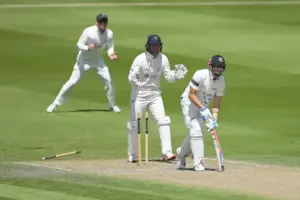
The turning point came in the final over, bowled by Axar Patel with Japan needing only a handful of runs to complete an extraordinary win. Umpires initially signalled a wide, only to reverse the call to a dead ball after India’s players protested in front of the officials.
The decision wiped out a run that would have taken Japan closer still, and the reaction afterwards was swift and largely unflattering towards India. Cricket writer Ben Gardner summed up the mood on social media: “With five off four needed for the biggest upset in cricket history, India have just bullied the umpires into overturning a wide call against Japan.” Gardner added simply: “Genuinely disgraceful.”
Commentator Kartik Kannan was equally direct, asking: “What’s the point of being a cricket power if you can’t use dissent to get your way.” Kannan went further in his assessment afterwards: “I think India was unsporting in not respecting a decision, which they might have accepted if the stakes weren’t so high in the final over.”
Daniel Cherny questioned the precedent the decision sets for the sport. “It’s almost immaterial whether it was a wide or not,” he wrote, before adding a warning for cricket’s officials: “The game falls apart if an umpire’s decision can be overturned following aggressive gesticulation from a player.” Full detail on the passage of play is covered in the Fox Sports match report and quotes.
Japan captain Kendel Kadowaki-Fleming took the defeat with composure. “Yeah, extremely proud, as I think I’ve been saying to a few other guys, that when it gets that close, it’s actually a little bit tougher to take, and the emotions are running pretty high in our group,” they said. Kadowaki-Fleming added: “But the fact that we were able to run the best team in the world, in my opinion, to the last ball of a game is pretty special.”
Iyer offered generous praise for the hosts after India beat Japan in a game that carried far more jeopardy than the scoreline suggested. “It doesn’t matter how good a team you are, because the oppositions are also competitive, and the attitude and approach the Japanese team showed today was impeccable, and kudos to them,” the India captain said. He added: “The approach was outstanding,” before backing Japan’s development: “So, I’m sure that they are on the right track right now.”
The result comes as Japan builds toward full T20I status for Asian Games cricket, part of the wider push behind Tuesday’s fixture. A near-miss of this kind against a full member will only strengthen that case, even if the finish leaves a sour taste for those who watched the final over unfold.
India Player Ratings: Patel and Iyer Weather Sano Storm
Three names shaped India’s afternoon at Sano, from the top of the batting order to the tension of the final over.
Shreyas Iyer (Captain): 7/10. Oversaw a stuttering 32-4 in the five-over innings and then found himself at the centre of the final-over review. His generous praise for Japan afterwards showed the composure that got his side over the line.
Axar Patel: 7/10. Bowled the tense final over and stood at the heart of the night’s biggest talking point, after India’s protests turned an original wide call into a dead ball that preserved the win.
Abhishek Sharma: 4/10. Removed by Charlie Hara-Hinze for a golden duck at the top of the order, undone inside the first over by disciplined bowling in tricky conditions at Sano.
Japan Player Ratings: Hara-Hinze and Kadowaki-Fleming Excel
Charlie Hara-Hinze: 9/10. Struck twice in two tidy overs, including the golden duck dismissal of Abhishek Sharma, and finished with figures of 2-17 in the five-over format. The stand-out performer in Japan’s landmark contest with a full member.
Kendel Kadowaki-Fleming (Captain): 8/10. Led Japan to within two runs of one of the format’s great upsets, then handled both the defeat and the late controversy with visible pride in the dressing room afterwards.
This Cricket breaking news feature has been enhanced and enriched with confirmed live data with the support of generative AI and our data partners SportMonks.com. This helps us bring data-led news and information to you and other Cricket fans more efficiently and accurately, ensuring https://readcricket.com is Cricket fans’ number 1 choice for independently published news. For more information you can view our editorial policy in our footer or email the team on [email protected].