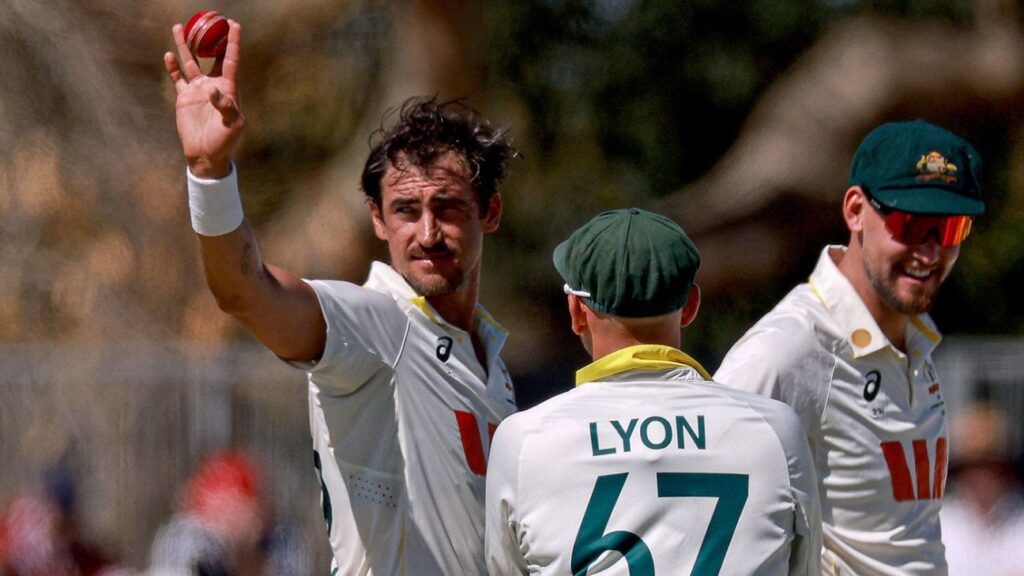

Australia Test pitches have rarely been examined as closely as they are this week. The Mackay surface on which the second Test against Bangladesh finished inside two days had, ESPNcricinfo reported on Tuesday, just 3.5mm of grass on it — and is still set to be rated highly by the ICC. It was the third two-day finish in Australia’s past seven home Tests.
Cricket Australia has decided that is a trend rather than a run of bad luck. Alex Malcolm reported that CA will urge curators to tip the scales back towards batters in the coming Sheffield Shield season, the message to groundstaff summarised in the report’s own words: if in doubt, favour the batter.
What Cricket Australia has actually asked for
The groundwork was laid before Mackay. CA’s operations and scheduling boss, Peter Roach, held discussions with the curators of Australia’s first-class venues at an annual conference in July, while the men’s state coaches met CA high performance staff including the national coach, Andrew McDonald, the head of national teams, Ben Oliver, and the head of cricket, James Allsopp. Pitches in home Tests and Shield cricket were a central item.
The numbers put in front of them were unflattering. Four of the last 20 home Tests in Australia have not reached a third day. Home Test batting and bowling averages are both trending downwards, as are Shield averages, and McDonald revealed that his coaching staff have begun measuring batters’ output by metrics other than the raw run tally. Sitting behind all of it is the Kookaburra ball itself, which has carried a second layer of lacquer and a reinforced seam since 2019.
A batting problem, a pitch problem, or both
The honest answer from inside the Australian dressing room has been that it is not only the surfaces. Pat Cummins’ verdict on the two-day finish, as reported by ESPNcricinfo, was “some good bowling and below-average batting” — and plenty of former players have gone further, framing the past 12 months as a batting crisis in which technique and temperament, not grass length, are the variables that have changed.
Writing in the Guardian, Geoff Lemon argued that the Bangladesh series settled almost nothing: the defeat in Darwin will remain a punchline, the win in Mackay was over in five sessions, and Australia’s top order remains, in his phrase, an almighty jumble, with questions still hanging over Marnus Labuschagne at No 3 after a series without a big score. Two-day Tests are not much use to a selector. Mitchell Starc’s 22-ball five-wicket burst was thrilling television and told nobody anything about whether Australia’s batting can survive South Africa, New Zealand, India and England in succession.
Why England should be paying attention
This is not a purely domestic housekeeping matter. The precedent ESPNcricinfo cited alongside Mackay was the two-day Test in Perth during last season’s Ashes, another surface the ICC rated highly. If Shield cricket is deliberately flattened for a season, the batters produced by that competition — and the bowlers who learn their trade on it — will arrive at the next Ashes cycle shaped by different conditions to the ones England met last winter.
England, meanwhile, have their own version of the argument, having spent the past week arguing about which grounds should stage the next home Ashes rather than about what those pitches will do. Both boards are, in their way, trying to legislate for entertainment without gutting the contest.
Which returns us to those 3.5mm of grass. A pitch that produces a 22-ball five-for and an ICC commendation in the same match is not obviously broken — it is simply doing something the game has not yet decided whether it wants. Cricket Australia has now, at least, said which way it would like the doubt resolved.




Comments.
Loading comments…