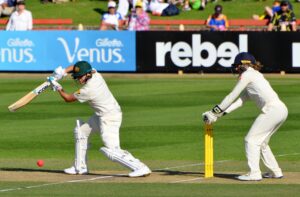
Ailsa Lister’s official reprimand is more than a footnote to Scotland’s narrow World Cup defeat. It is a clear reminder that the ICC’s disciplinary process is being applied tightly at a tournament where pressure, visibility and scrutiny have all risen sharply.
The Scotland batter was sanctioned for a Level 1 breach of the ICC Code of Conduct following the Group B fixture against West Indies. The charge related to Article 2.2, which covers abuse of cricket equipment, clothing, ground equipment or fixtures during an international match.
According to the ICC, the incident came in the 19th over of Scotland’s innings. After being dismissed, Lister threw her bat and gloves on the ground before kicking and knocking over a bin next to the team dugout. She admitted the offence, accepted the sanction proposed by match referee GS Lakshmi, and avoided the need for a formal hearing.
Why the timing matters for Scotland
The reprimand lands in the context of a seven-run defeat, not a routine disciplinary note. West Indies had set Scotland 154 in Leeds, and Scotland came close enough for the final overs to carry genuine consequence. That is the space where frustration becomes visible, and the ICC’s response shows there is little appetite for emotional overspill being treated as harmless theatre.
For Scotland, the bigger issue is not the single demerit point added to Lister’s disciplinary record. It is the lost control at a moment when the team had pushed a stronger opponent deep. Tournament progress for developing sides is often measured in margins, and Scotland’s campaign has repeatedly lived inside those narrow spaces.
ReadCricket had already profiled Scotland’s wider World Cup challenge in its team preview. This sanction adds a different layer: the standards demanded at global level are not just technical, tactical or physical. They are behavioural, too.
The ICC has drawn a low-tolerance boundary
Level 1 breaches carry penalties ranging from an official reprimand to 50 per cent of a match fee, plus one or two demerit points. Lister received the lighter end of the scale, but the published detail matters. It tells players that even after a dismissal, and even away from the middle, the dugout area remains part of the match environment.
That is especially relevant in a women’s tournament being watched by bigger crowds and wider broadcast audiences than previous editions. The ICC does not need every moment to become a formal hearing for its line to be understood. A public reprimand is often enough to reset the boundary.
The process also protects the rhythm of the competition. Lister’s admission meant the matter was closed quickly, with on-field umpires Claire Polosak and Kerrin Klaaste, third umpire N. Janani and fourth umpire Nimali Perera having levelled the charge. In practical terms, Scotland avoid a drawn-out distraction, while the tournament still gets a visible enforcement decision.
That balance is important. Cricket cannot demand raw edge from associate and emerging nations, then pretend frustration will never appear. But once that frustration damages equipment or fixtures, the ICC’s framework gives officials a clean route to act without escalating every case into a major controversy.
Scotland can still take cricketing value from how close they ran West Indies. Lister, though, now carries a disciplinary marker into the next 24-month window. For a player in a side trying to convert competitiveness into results, the lesson is blunt: elite matches punish lapses twice, first on the scoreboard and then in the match referee’s room.